DC S E T L I S T

DC SETLIST

Saturday, March 5, 2011

SOFAR SOUNDS EDITION 3 INTERNATIONAL MUSIC SALON / DC

FLOWERS


LouLou sings for SUNWOLF


LIGHTFOOT

HASH

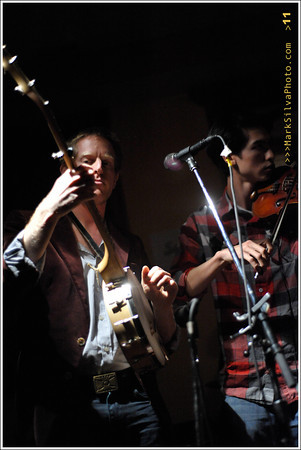
Second String Blue Grass Band

Second String Blue Grass Band

Nick Fitzhugh of REDFITZ Productions

KALANI of SUNWOLF

PBR

Andrew Buckwilde

  
ORA NWABUEZE

Strings of Second String Blue Grass Band       


PHOTO CREDIT:  MARK SILVA

Thursday, February 24, 2011

SUNWOLF HOWLS AT THE MOON: Q&A with ROB TIFFORD (aka KALANI) of the DC band SUNWOLF!


Photo Credit: Rob Myers

Q:  Who is SUNWOLF (Click here to check out their music!  The Cherry Crush track is DC Setlists' favorite)?  Introduce us to the band.

A:  Sunwolf isn't really anybody. It is more of a feeling. I have been fortunate enough to find a band that shares this idea and belief in the immediate. Will Rast plays drums, Hash plays bass, Tom Bunnell plays guitar and Enea plays keys.

Q:  When talking about the band you said, "it happened organically", how did SUNWOLF form as a band?

A:  Yeah it was pretty organic. I had a show to play and was talking to Hash one day about how I had no idea how I was going to be able to play bass and sing at the same time. At that time, I thought I would play bass because that is what I played normally.  Hash said he would play bass, that meant I could play guitar and sing. Then I figured I would have a backing track with the beat and all the other sounds on it, but I really didn't want to have to deal with a computer during a live show. So, I was hanging out with Will Rast one day and asking him what he thought about playing to a click track and out of the blue, he said he would play drums. I was stoked, I didn't even know he played drums!! So all of a sudden I had a sweet rhythm section. I was talking with Tom one night, same type of thing, and I asked if he would want to play because I needed another guitar because I am really not that good a player, and need somebody to fill in all space I leave. So he joined and then the four of us played together a few times and I like  it, but I kept hearing keys.  Will was the only guy I really knew who played keys and he was playing drums. Flash-forward a week,  I was DJing at ESL, and Enea, he does the sound over there ,and I were listening to what each of us was working on, and Enea liked the  Sunwolf tracks and I asked if he wanted to play keys with us. He said yes thankfully. It all just fell together really naturally. It just goes back to idea behind Sunwolf which is that it is more of a feeling. You couldn't plan this, it just happened, and that is what makes it really special for me. Its this feeling I want to create with music. That feeling of the immediate and the moment.                         

Q:  What are the details for your gig TONIGHT?

 A: 
We play VELVET LOUNGE with OKINAWA
doors 7:30
OKINAWA 9:15
Sunwolf 10:00
tickets $8

Q:  How did you hook up with Okinawa? 

A:  OKINAWA is Danny and his brother's band. I know Danny from when he was
 playing with Owls and Crows. He is an awesome drummer! OKINAWA rocks!

Q:  How long were you in studio working on the SUNWOLF EP?  You'd mentioned, "it was all about capturing emotion" for you.

A:  I guess you could say I have been working on this for years,  it is really the natural culmination of me working on music in my studio. The actual EP came together very quickly. FEDERICO ABUELE produced it.

Again, back to the organic thing. I was playing Federico some of the tracks I had, which were really just sketches, and was asking him some advice on how to get some structure and he said he would work on a mix for track if I wanted.  So he did a mix of 'the hunted' and I loved it and he was having fun stepping in as the producer so we did more. He would send me versions and we would talk and make revisions and get to
a point that we both really liked. I am working on a few more tracks to make a full length and will properly release something on vinyl in the summer.

Q:  Where did the name SUNWOLF come from and how would you describe your sound? 

A:  How would I describe my sound? I don't really know. I guess dreamy? I just know when I get it when my head gets all swirly. The name came when I was camping over the summer.

That night there was a full moon and you could also see Jupiter below it. It was a really beautiful night.  I was sitting by the fire playing guitar and it came out in a lyric and I liked the way it sounded. I thought it would be 'cool'

Q:  What does SUNWOLF have cookin' early this up coming summer?

A:  I will release a full length sometime over the summer and keep playing shows.


Q:  Turn us on to music some of us might not have heard before!  What are the 5 songs (& artists) that have been looping on your iPod this week?

A: 
Gabor Szabo - Search for Nirvana
T Rex - Ballrooms of Mars
Lee Hazelwood and Nancy Sinatra - Some Velvet Morning
Bill Fury - I'm Lost Without You
Funkadelic - Mommy what's a Funkadelic?


Photo Credit: Rob Myers

Thursday, February 17, 2011

AND YOU DON'T STOP!: Q&A with CHUCK D Leader of the legendary hip-hop band PUBLIC ENEMY


Carlton Douglas Ridenhour is better know as Chuck D, the leader of the socially conscious hip-hop band Public Enemy.  Chuck D is an author, producer, rapper, music activist, radio show host and supporter of up and coming talent everywhere.  We were able to sit down with Chuck as Public Enemy celebrated the 20th anniversary of their infamous album "Fear of a Black Planet"  on a major world tour this year, check it out...

Q:  We caught Public Enemy’s show at the 9:30 Club when they came through D.C. this past August. Great show, by the way. How was it hitting the road again with long-time bandmate, Flavor Flav, on another world tour?  You just got back.


A:  I mean we’ve never really gotten off the road so it’s like it’s just a continuum. Every year and a half has a different theme and this theme was 20th year anniversary of Fear of a Black Planet.  Public Enemy's been continually touring for 24 years.  I don’t know where people get information sometimes, like we broke up or whatever but we’re the longest running group and we think that there’s been groups that broke up but that’s not us. So I don’t know how they confuse it.


Q:  So we met you this past October.  Both you and Bomb Squad member/producer, Hank Shocklee,  were panelists at the FUTURE OF MUSIC COALITION POLICY SUMMIT held here in D.C. at Georgetown University.   Artist survival in this new digital age was one of the many topics that was discussed.  In your point of view, what would be the top three things that you think aspiring artists need to know given the current landscape of the music business?


A:  They need to know the history of the music and the genre that they’re getting into.  I think artists need to know all the elements and all the details of the surrounding infrastructure to realize how lack of the infrastructure that there is. And I think that – when I say the history before, they need to know what was distribution in the past?  What was manufacturing in the past? What is it now? If we don’t know what happened before, you can’t make parallel adjustments. And I think artists need to definitely be able to manage aspects of technology in order for them to do more things themselves because we’re in the digital realm and if the artist doesn’t know how to actually work these tools then they have to partner up with people that do.                                                                                                                    


Q:  What do you consider to be the most valuable social media tool for you right now? 

A:  There’s a lot of things that are equally valuable. And you can jump ahead and start with social technology and social medias but if it doesn’t really answer to what you’re about and the demographic that you’re trying to talk to, you could be spending your time in an abyss of nowhere. Social media-wise for me I personally choose Twitter because it reduces the amount of work I have to get across and answer questions. I can answer questions in short form. It requires a certain skill that you have to reduce your characters and still get your point across. I like it because I could deal with more people that way whereas email and Facebook – I’m not on Facebook but I have people around me in my company they’re on all social media but personally I’m an ordained "tweeter".  And I don’t tweet things that don’t make sense to me, like I wouldn’t tweet like, “Okay, this is what I had for lunch today and you know.”  For a social gathering per se, I’m always trying to give out an opinion or some advice and that works for me.


Q:  At the Future of Music Coalition Policy Summit you mentioned that you are interested in a company overseas called SellaBand, tell us about it. 


A:  Yeah, I’m actually working with a company called SELLABAND and actually what it does is it gathers band funding for and also investment into albums or records or any different project so I’m involved with them on a future record that we have produced as Public Enemy and I really wanted to be involved with working with SellaBand to help other artists see it but sometimes you’ve got to prove that you’ve been using it as well, that’s how Public Enemy got involved in it.

Q:  You’ve done a huge number of collaborations with artists including D.C. native, Henry Rollins, Rage Against the Machine, Sonic Youth etc...


A:  I never knew Henry was from the D.C. area. I’ve always been a fan of his, Henry Rollins is a god in my eyes. The vision in my mind is that he encouraged me to always do strong shows, never slack off and also encouraged me and my books.


Q:  How did the collaboration with Rollins on Black Flag’s “Rise Above” come about and how do you think hip-hop has influenced those musical genres?


A:  I guess they usually happen from phone calls and “do you mind checking this out?” And that’s how they happened. They don’t really happen from lawyer to managers like they used to and that’s good.  So it’s something that I think – it works for the business and I think artists who communicate with each other on ideas and certain things, I think it’s something of a great direction for the art form.  We need journalists in hip-hop who maintain their smarts and don’t actually stoop to dumb themselves down or dumb themselves in a corner just because they feel it’s the popular direction. I think they need to hold their ground covering with some kind of standing and integrity. Same thing with managers. We don’t need managers that cater to the artist. I think that managers need to encourage the artist and I think too much of that over the last – I’m trying to figure out how many years, maybe 15 years of management and infrastructure being sloppy. The new media, media companies, people who just have been doing it just to stay paid and that kind of ticks me off. For me I think it’s beyond what you get paid. You have to have some passion.                


Q:  You have many great artists on SLAMJAMZ.COM  record label. Can you tell us about Crew Grrl Order and their song, “First Lady” and the SHE revolution that they’re trying to spark?


A:  Yeah, most importantly I think that there have been a bunch of the things that have challenged hip-hop, people talk about hip-hop being such a big musical genre. Well, how about womens involvement in hip-hop? I think that’s fallen off drastically. Women as groups, women who are autonomous to any kind of male-dominated order. The first hip-hop record, there was a woman who was the head of the record company, Sylvia Robinson, who discovered the Sugarhill Gang and Sugar Hill Records was her own company.  Then you had the all female group The Sequence who had like one of the first five records that came out &   The Sequence were in that top five. So you have a women group and women involved in the arrangement of rap records and hip-hop and that’s pretty much been eradicated. It’s been male-dominated and women have been chased out of hip-hop as far as autonomous figures. So I wanted to be involved with helping this out in a brotherly manner. So I want all the artists that we have on SLAMjamz, I don’t say that they are my artists and I don’t say that I’ve discovered them because they’ve already been artists now.  Crew Grrl Order is all women, they think they want autonomous decisions and then they made a record that and not every rap record that comes out has got to talk about what I got or how we manage this and how we’re posing up against that. They did a record about somebody and in the 20th year anniversary of Ladies First by Queen Latifah, they made a record called FIRST LADY which was their dedication to First Lady Michelle Obama, now that’s a first. I would love to get, to have Michelle Obama see the video ( CLICK HERE TO WATCH VIDEO ) one day and listen to the song. But Crew Grrl Order, they made that decision on their own and then at the same time, they also did a record called Go Green which is about the environment. So rap music can change the world and I’m glad to be involved with and then associated with artists that want to make that change. So SHE-movement, what I do is like we, my partner Gary G-Wiz, we set up an internetwork so for women Sisters in Hip-hop Everywhere, and for women in rap music, we set up SHEmovement.com. That’s what we do. We set up portals for our internetwork and for our infrastructure, for the lack of infrastructure that’s out there. So you can go right on the SHEmovement.com and see that there are women artists, emcees, DJs, rap artists, everybody involved in the elements of hip-hop and they’re coming along one by one and we hope that that’s a niche portal for Sisters in Hip-hop Everywhere. That’s what S.H.E. stands for. And we’ll have radio stations and even web TV branching out of that because they’re shooting their own videos, they’re making their own songs and they don’t have to worry about submitting their music to some guy oriented/testosterone-filled thing.


Q:  Given the election of President Barrack Obama, do you still think that America lives In Fear of a Black Planet?

A:  I think America’s policy has been just to distance itself and detach itself from the rest of the world.  And this policy of isolated dominance has negatively affected America and the beautiful thing I think about President Obama is that his whole agenda has been trying to reattach America with the realities of the rest of the planet, how to fit in and not dominate. And even in the State of the Union, the other day he spoke on that. I think those are great attributes of this President, he is trying to reattach America with the rest of the world.  When people ask me,“What do you think about President Barrack Obama?”  I call him President with a salute, is like good man - bad government but he knew that coming in.  He came in prepared.


Q:  We always ask everybody to turn us on to some new music and share with us the five songs and artists that have been looping on their iPod this week.


A:  That’s impossible for me. That’s impossible because I do a radio show. I do a radio show called “And You Don’t Stop.” It goes around the world and we’re setting up our radio internet with RAPSTATION.COM which will be a hub for all the radio shows, playing rap music and hip-hop around the planet. We can be streamed on iTunes on Enemy Radio which is the first dedicated to Public Enemy with music in all our affiliated radio stations. So I have a radio show called, “And You Don’t Stop” and it can be heard on WBAR.org. Check it out on the archive area and it’s almost like 120 minutes of what’s like 60 minutes of Bryant Gumbles' Real Sports. It’s the sum of many parts. So I always have a vast amount of songs circulating around me, past, present, future, international, local. So it’s hard for me to name the names but... I will tell you that on my Crew Grrl Order, the group just started with the Heet Mob which is on my latest album from Kansas City and we had an album out called "Found Missin" and then Son of Bazerk, who actually opened up that night in D.C. And they’re wonderful.

I hope that you tweet me at @MrChuckD and you can catch our music at SLAMjamz.com, which is the longest running hip-hop site. Period.

Saturday, February 12, 2011

THE FUN BOMB! Q&A with KAMAL SOLIMAN, member of the band LANCE HERBSTRONG


The band LANCE HERBSTRONG also known as "The Fun Bomb" rolled through DC this past week as the opening act for Morcheeba at the 9:30 Club.  The universe seems to be conspiring for the band to be in the right place, at the right time with support coming from all directions.  We caught up with them backstage to get the scoop on who they are and where they're headed.  See what DJ Kamal Soliman shared with us before the show. 

Q:  Who is Lance Herbstrong and how did you formulate?  

A:  Lance Herbstrong is Kamal Soliman, Bill Sarver, and Peter Distefano.  Bill and I started all  this just as a fun studio project to remix songs we liked.  I was a big fan of Manu Chao  and befriended them all when they played Lollapalooza in 2006.  When Manu opened up the song Politkills for remix, I called bill to do the engineering for it.  I know Manu is a clash fan, so we decided to use the original instrumental version of the rock the casbah beat, a song called 'Mustapha Dance.'  after doing that song, we didn't do anything for a year, until I came off tour with thievery.  Bill and I did our second song, a mashup of Thievery's Meu Destino and Manu Chao's Mi Vida.  The new song is entitled Manu Destino and this is the song that launched everything for us.  Thievery loved it, ESL labelmate Federico Aubele loved it and enlisted us to do a remix for his album.  Once ESL licensed our music, we came up with the name, and were off and running from there. Peter joined the band when we played lollapalooza.  We remixed his Porno for Pyros song Orgasm, to debut at lolla.  I asked Peter to play it live with us and he loved it so much, he never looked back and is now a permanent member of the group.

Q:  You've been the tour manager for Thievery Corporation for several years now.  How supportive have Eric Hilton and Rob Garza been of your own musical endeavours? 

A:  Rob and Eric are a huge inspiration to me personally and to the band.  But with Rob and Eric it's not just a job.  I consider them to be great personal friends - and they are also one of my favorite bands, I love everything they've done, and after touring with them and the live band, I felt really inspired to work on music myself.  That inspiration led to our second remix Manu Destino.  From the second they heard it, they have been nothing but supportive of what we are doing.  And they invited Lance Herbstrong to play 2 official Thievery Corp/Massive Attack after parties on our last tour, and every time they both came up and played with us at some point during the set.

Q:  For those who've never seen one of your shows how would you describe your musical style?  

A:  That's tough to answer because we don't stick to anyone genre.  People tell us we do have a 'sound' but I'm not really sure what that is, although I do recognize that there is one.  What we do is take iconic old songs that people know and remix them or mash them up with others, so what you hear is a combination of the familiar music you've known all your life (but maybe haven't heard in a decade), and we put our own spin on it and modernize it for the people of today.  It's all an homage to these great songs of old that captured a feeling, and what we try to do is build on that feeling but take it to the next level.  I like to describe our show as a "fun bomb."  When we do our high energy sets, we see shit-eating grins on everyone's faces, and people both older and younger we see dancing like they haven't in quite sometime.  Especially these days when a lot of DJ culture is listening to really hard dub step, which gets people moving but not really dancing, I feel our
 show is a breath of fresh air to those that really like to groove and move their bodies.

Q:  We understand you've got tracks on Soundcloud and iTunes.  

A:  The songs on iTunes are the ones that we licensed to ESL music - those are Luna y Sol ( Federico Abuele remix ), I Came Running ( Ancient Astronauts remix ) and Cantata ( Natalia Clavier Remix ).  All the other unlicensed songs are on our Facebook, Myspace and Soundcloud.  If you go to LANCE HERBSTRONG and give us an email address, you can download our ACL set.  And once on the homepage you can click thru to all our other online properties.  The songs we've chosen to remix come from every genre.  Go to the sites and see for yourselves.

Q:  You played Lollapalooza last summer, tell us about that show...    

A:  Lolla was our second show ever, and where everything came together for us.  We had just finished the Orgasm remix and asked pete to sit in with us 2 days before the show.  Our drummers were invited to sit in with us here as well since they were from Chicago - they are Frank Orrall of Poi Dog Pondering and Thievery, and Ricky Gonzalez of the Thickness and Chicago Afrobeat Project.  We met Ricky the day of the show, and Peter never heard of us until we asked him to sit in 2 days prior.  The stage show was great, it was a coming out for us, where people in the industry who knew me came out of curiosity and left knowing that we actually have something good going.  We also played the Lolla afterparty on site at the festival, and this was the gig where everyone including us realized that Lance Herbstrong has something unique.  The after party was explosive, we did the high energy set and people were having the best time ever.  It was amazing, and this led to people in the industry giving us many more opportunities, without them having to doubt if the show was gonna be good.

Q:  You are based in Austin, TX and ended up playing an impromptu gig at the Zinc Stage at ACL 2010!  How did this come about?  

A:  This was crazy.  We had played the night before opening for Beats Antique.  At 3 AM I took all the band gear to my office on site, as we were playing the ACL after party the next day.  I got a call around 1 PM asking if it was possible for lance to sit in.  Since we had all the gear there, it was possible, I just had to wake up the other guys.  We got everyone down to the fest and went on at 3 PM.  We were replacing the Gayngs who had their bus and gear repossessed by the bus company and couldn't play.  No one knew who we were, but we won them over.  We had a huge crowd, and since I work for the festival, everyone was there to support.  Our creative team made an 8 foot joint and threw it into the crowd, all kinds of people were onstage dancing, it was a pretty epic, totally spontaneous, and a moment we will never forget.

Q:  How stoked are you to be opening for MORCHEEBA tonight the 9:30 Club! 

A:  We're totally honored and still surprised that we're even here.  And to start in DC at 930 club of all places is even that much sweeter for me, since Thievery and The Roots I have to them are all based here.  We're very excited, and looking forward to playing some of our more down tempo melodic stuff to warm up the crowd before Morcheeba.

Q:  We love your Electric Avenue Videdo! Why did you pick an Eddie Grant tune?  

A:  Electric Avenue is yet another reggae remix we've done.  Reggae is a big influence, and this song is so great, we felt it needed to be brought back to life.  We don't use any of the chorus parts, just the main verses, and the video, well we just had fun with it.   The whole thing is a blast back to the 80's - anyone who lived during that time knows how big that song was, and the comedic video is a reflection of that time.  We hope everyone enjoys it, we had a damn good time working on the song.  Special thanks to our VJ Chris Jackson for creating the video.  CLICK HERE TO WATCH THE VIDEO .

Q:   South By South West is in right in your backyard in Austin.  Will you be playing any gigs that week?  

A:  We are.  Right now, we are playing the C3 CONCERTS  Late Night Industry Party, the Madison House Agency showcase at Beauty Bar, and a show at the Virgin Music House.  We will probably add another show or two by the time it comes upon us, but so far we have these 3 shows.

Q:  What are the 5 songs (& artists) that have been looping on your iPod this week?  

A:  A lot of whats on my iPod is old classic reggae: 

Reggae is therapy to me, and when we travel I pretty much need to hear it, it just hits you right, its like the sun or the ocean after a big hangover, it just rejuvenates.  I have 'Roll Call' by Tenor Saw, 'Wicked Act' by Black Uhuru, 'Legalize It' Sublime version, 'Ganja Smuggling' by Eek-a-Mouse, and 'M16' by Lone Ranger (who we actually mixed into a drum and bass track and mashed that up with Thunderball's dnb version of 'Bam Bam' by Sister Nancy - new version altogether is called Bam16).


Photo Credit:  Brad Dancy

Friday, February 4, 2011

In one word: FUNKY. Q&A with Daryle Maciocha a.k.a. DJ DMAC!

DC SETLIST recently caught up with local DJ, Daryle Maciocha.  DJ DMAC managed to cover ghetto funk, the art of being a "music-obsessive", digital cumbia, the Smithsonian all while "keeping the soul largely intact"!  Read on...


Q:  Hey DJ DMac, for those who have yet to catch one of your gigs, how would you describe your DJ Style?

A:  In one word: funky. In many more words, its an eclectic blend of nufunk, old-school hip-hop, funky breaks, electronica, vintage funk and soul, breakbeats, Latin, heavy disco, house, electro and a touch of indie. I have wide-ranging tastes and that's reflected in what I play.


Q:  Tell us your story. How did you get started DJ-ing?

A:  Always a music-obsessive, I was offered a gig at a local bar in college in upstate NY. It was an 'alternative' night (when that term actually meant something) and I was hired to play alternative rock and indie dance. Despite learning basic DJ skills on the job every week, my residency there was really popular and as the night grew so did my hunger for new sounds. Soon my sets encompassed hip-hop and techno and whatever else I thought would work. It was a crazy Thursday night party where a crowd of college kids and locals of all different stripes danced to music we all really loved. I had taste and talent in inverse proportion, but it didn't matter much at the time! Eventually I got some deep exposure to the underground rave scene, which was a real education. I heard some incredibly talented DJs and some really amazing music.

After I finished school and moved to DC, I got away from Djing for a number of years (I was a Smithsonian employee and believed I had to start acting like an adult--it didn't last...) but continued to collect vinyl like a fiend (indie, old funk & soul 45s, dusty soundtracks, hip-hop, whatever I was into at any given moment). I got an opportunity to DJ at Ian Spiv's [now-legendary] Spilt Milk night at [the even-more legendary] Red. Hearing friends with serious collections play deep funk and rare disco from original vinyl on that incredible sound system was a truly singular experience. Soon after Spilt Milk, I met DJ Eurok and really got inspired to step up my game and take the craft of DJing seriously.

Q:  What's your twitter handle?

A:  @therealdjdmac

[Some other dude registered 'djdmac' before I did, tweeted once almost 2 years ago, and has done nothing since. Luckily I've owned http://www.djdmac.com for years!] 


Q:  You've been on the DC scene for 10 years now. In your view, how has the scene morphed/changed?

A:  Like everywhere else DJ culture finally hit the mainstream, which has changed the scale of everything. DJs can now sell out mid-sized rock clubs. If you'd have told me in 2001 that local DJs would be selling out the 9:30 Club in less than 10 years, I never would have believed you! But here we are.

Technology has had the biggest impact. Laptops have largely replaced traditional vinyl and social media has completely reinvented promotion. Digital production tools are readily available--as are nearly instantaneous means of distribution--and we're seeing serious DC talent make waves globally without record label backing. That's amazing and inspirational.

Despite all that hugeness, though, you can still hear great underground DJs spinning in intimate spots all over town. There's room for everybody. And an eager audience for it, as long as you let them know you're there.

Q:  You've got a gig at Dodge City FEB 4th called VAQUEROS ELECTRICOS! Who's hitting the decks with you?   

A:  The always awesome Rusty B. of All Good Funk Alliance. We spin funk, boogie, funk, hip-hop and digital cumbia. DODGE CITY is a great little spot and the dance floor has been really heating up as of late. Come show us some love.


Q: You also have a show at Marvin's every 3rd Friday of the month, what can folks expect?

A:  Well, I'll be in Paris with my lovely wife this month so I won't be at Marvin in February, but come March I'll probably have a healthy stack of French house along with the funk, soul, breaks, disco and hip-hop I usually play.


Q:  What's your preferred source for finding new music these days?

A:  These days I rely on new release notices from folks like Groove Distribution, Turntable Lab, Rough Trade, and Soulseduction. I regularly read Pitchfork and Stereogum. And Ghetto Funk has been *killing* it lately!
I can always count on finding something new--whether its a brand new release or a dusty vintage gem--at Som Records. The internet's fast, convenient and seemingly limitless but nothing's more satisfying than digging through real crates in a real record store. [This is not a paid endorsement, honest.]

Q:  Finally, what are the 5 songs & artists that have been looping on your iPod this week?

A: 
1.) Escort – Cocaine Blues (Escort Records)
Slinky but chugging disco rework of Dillinger's dancehall classic 'Cocaine In My Brain.' One of my favorite singles of 2010.
2.) Mooqee and Pimpsoul – Keep Poundin' (Bombstrikes)
Largely based on a sample of Buddy Rich's cover of 'The Beat Goes On,' this is a swinging mid-tempo breaks monster.
3.) Quantic Presenta Flowering Inferno - Dog With a Rope (Tru Thoughts)
Will Holland further explores his fusion of cumbia and dub. Simultaneously ground-breaking and authentic. Cold weather blues antidote #1.
4.) Incarnations - Make You Mine (Love Monk)
Members of Brooklyn-based Phenomenal Handclap Band head to the south of Spain to create a breezy slice of Latin-grooved pop. Cold weather blues antidote #2.
5.) Adele – Rolling in the Deep (Jamie XX Shuffle) (XL Recordings)
The warm, thumping acoustic soul groove of   Adele's pre-album single gets an electronic reworking by Jamie from The XX, adding martial snare drums, handclaps and synths, but keeping the soul largely intact.
                                                          

Tuesday, January 25, 2011

"I had always had a “shadow life” as a working musician..." Q&A with David Levy, Co-Founder of Bach 2 Rock!

David C. Levy has been the Cambridge Information Groups principal advisor since they acquired Sotheby's Art Institute in 2003. David left his home town of New York in the early 90's to lead DC’s largest private cultural institution, the Corcoran Gallery of Art and its College of Art and Design, where he served as its President and Director until 2005. Prior to leaving New York he was Chancellor of The New School University, a post he accepted after completing 20 years at the helm of Parsons School of Design. During his tenure at Parsons, David built it from a small school with fewer than 500 students into an international institution with an enrollment of 12,000 and a world-wide network of campuses including Los Angeles, Paris, The Dominican Republic and Japan. A life-long professional jazz musician as well as an art historian, photographer and designer, David founded New York’s first degree granting school of jazz, which thrives today as one of the world’s leading jazz conservatories, The New School for Jazz and Contemporary Music. During his tenure at Parsons and The New School he initiated and oversaw the mergers of the Otis Art Institute of Los Angeles County into Parsons and the Mannes College of Music into the New School.  We recently spoke with him about his latest venture, Bach 2 Rock - America's Music School! Check it out...

Q.  What is Bach 2 Rock?

A.  Bach to Rock (B2R) is an emerging chain of music schools serving students of all ages and based on a couple of very logical but innovative principles. These are summed up by our belief that students learn best when they join together to play the music they like the most. So the core of our method is to place students in small bands of four to six players, creating a powerful bonding based on social and musical interaction. This is coupled with an opportunity to play music that is meaningful today and for which kids get significant peer recognition and social credit.

Our students also take private lessons with us but we generally limit these to half an hour, so the ideal instructional time is 1½ hours -- an hour of band or ensemble practice immediately following or before the private instruction. From a technical perspective, B2R students are preparing themselves to play whatever music floats their boat – literally from Bach to Rock!

Q.  How Did B2R Come About?

A.  All of this began about seven years ago when my son, Alexander, then in third grade, was eight years old. He had begun to take very traditional piano lessons and though it was clear that he was musically gifted, the discipline of practicing was just not his thing. This was very frustrating to us because it was clear that he was not coming close to achieving his musical potential.

Then the mom of one of his classmates stumbled on a brand new storefront music school in Bethesda with the unlikely name of “East Cost Music Production Camp.” Something about the place intrigued her and so she ventured inside where she met its founder, Jeff Levin, a young, entrepreneurial performing musician and teacher who had left the school system to start a school of his own. He wanted a place where kids could learn the basics while simultaneously forming bands and playing classic, contemporary and even original rock music.

Excited by the concept, this mom sought out other parents in her son’s class, including us, and proposed that our kids form a band and study at “East Coast.” The result was a five-piece band of 8-year olds, in which Alexander was the only member with any prior musical instruction. Not only did these kids have to learn to play and work together, they had to learn their instruments from ground zero.  And learn they did!

The exhilarating thing for me was observing how this band rapidly became a central focus of our kids’ lives. It defined them in many ways, enhancing their self-esteem and giving them unique stature among their classmates. Perhaps of equal importance it became a strong bonding force among us, the parents. We barely knew one another at the beginning but we quickly became good friends, forming a closely-knit group that remains central to our social lives today, some seven years later.

For my part, the whole thing was especially intriguing and not a little bit nostalgic. I had always had a “shadow life” as a working musician, playing gigs and on the road with some of the world’s greatest jazz artists, and during my years in New York, where I headed Parsons School of Design and was Chancellor of New School University, I had founded, nurtured and written the curriculum for New York’s first degree-granting school of jazz, The New School for Jazz and Contemporary Music. But when I came to Washington to head the Corcoran, the demands on my time made it impossible to play music professionally on a regular basis.

Picking up Alexander after band practice at East Coast was redolent with all that music meant to me, and as I would wait for him to finish his weekly practices my musings would run to such things as “wouldn’t it be great to be part of this?” or “why don’t I just do it?” But of course I had a full time day job and there was just no room to put such fantasies into action.

This changed, of course, when I left the Corcoran. In my new role as President of Cambridge Information Group’s Education Division, my initial responsibility was to head Sotheby’s Institute of Art (A graduate school with MA and PhD art history programs in New York, London & Singapore), but I also found myself in an entrepreneurial environment where there was both investment capital and a thirst for innovation. So I went to East Coast’s founder, Jeff Levin, and said, “This is a great educational concept. Let’s take it national.”

The rest, as they say, is history and in July of 2007 we opened the first of our six Bach to Rock schools in the DC area.


Q.  What intrigued you about the underlying concept of Bach 2 Rock?

A.  The thinking behind the B2R concept and curriculum (our secret sauce) is a little more complicated than it may sound at first blush. If you consider the nature of traditional music instruction, it becomes clear that this is one of, if not the most, solitary activity we ask of young people. The stereotype (which many of us have lived through) is of being confined to a room with a piano, clarinet or half-sized violin while a parent (usually our mother) has set the kitchen timer for 45 minutes. She informs us that we are not coming out until she hears us playing steadily and the timer’s bell has rung.

Meantime our friends are playing video games or soccer and we hear their gleeful voices, siren-like, through the open window. But unlike Odysseus and his crew, we can’t practice music while lashed to the mast or with our ears plugged with wax. So we suffer through exercises and silly compositions (with even sillier names) written by textbook authors of indifferent ability, or we play music composed three hundred years ago that has little resonance in our everyday lives and is certainly not discussed in the schoolyard or recorded on our iPods.

The end result is that unless a youngster discovers a deep and personal musical proclivity, the advent of music lessons is a declaration of war in most households. After five or six months the student is begging for release and the parents, after perhaps a year or more of acrimony, acquiesce and let him quit.

Does the study of music really have to be this way? No. As we say at B2R, “Learning to play music should be fun. It’s called play for a reason!”

That line may sound glib, but once you fully take onboard the fact that the solitary nature of musical learning is its greatest deterrent, you can focus on techniques to mitigate the problem and transform musical study into an important part of students’ lives.

Playing Music as a Team Sport
At B2R we turn music instruction into the equivalent of a team sport. Bands (teams) perform before large, enthusiastic audiences at exciting competitive events (e.g. Battles of the Bands); they play frequently in public at a variety of clubs and other venues throughout the region and they record in our professional, Pro Tools-based recording studios.

All of this fosters healthy social and interpersonal development along with a steady undercurrent of energy and excitement. And the self-confidence our kids develop along the way is truly astounding. When ten-year-olds can walk up to the mike on the 9:30 club stage and play to a packed house with the energy and bravado of a pro, you know your methodology is paying off, big time!


Q.  Tell us about the upcoming Battle of the Bands happening at the 9:30 club January 29th!

A.  B2R’s biggest public event in the DC areas is our semi-annual Battle of the Bands, which is held at the 9:30 Club in January and June. The upcoming “Battle” will run for three days, feature more than 90 bands and have an audience of about two thousand. We also have many outdoor concerts in parks and public spaces when the weather is warm and we arrange opportunities for our kids play in clubs and restaurants and to be featured at various community events throughout the region. In Maryland our “acoustic” musicians (i.e., our classical and pop players and vocalists) perform twice each year at Strathmore Hall. In Virginia they play in the concert hall of the Franklin Park Art Center, Northern Virginia’s most important regional venue.

Q.  Is Bach 2 Rock hiring?  If so, who are your best candidates?

A.  B2R is always looking for new talent. We have been expanding rapidly and need qualified musician/teachers to fill our growing needs. Also, we limit our faculty’s teaching loads so that they can focus on their students as individuals as well as continue their professional lives as musicians. As a consequence we have a rather large number of faculty and there is always an opportunity for gifted instructors.

Our faculty is comprised of working professional musicians, often in the building stages of their musical careers. We look for people who can couple highly developed instrumental skills with a solid knowledge of music theory and educational talent. We also seek teachers and staff who can both express and demonstrate a genuine interest in helping young people learn.

Q.  Your very own son has a band called R.A.T.E.D. at Bach 2 Rock, tell us about his experience.

A.  The band’s name, R.A.T.E.D, is an anagram formed from the initials of its members’ first names. I told you the band’s origins earlier, but the amazing thing about it is that even though these kids started from scratch as eight year olds, by the time they were 12 they had virtually become professionals. In addition to the 9:30 Club and the battles of the bands (which they have won four times), they performed at the Verizon Center when they were 9 and more recently at Comet Ping-Pong, Jaxx, the Hirshhorn Museum and Sculpture Garden and at lots of other public venues throughout this area. Their main focus now is writing and performing their own music.

Combining Learning and Social Development
In addition to our kids’ intense musical learning, the socialization process inherent in the development of this band has been very interesting to observe. 

Kids, as you know, can be really mean to one another – they haven’t learned the social disingenuity that we adults use to overlay our more abrasive feelings, so they don’t cut each other much slack. As this band was developing, if one kid or another wasn’t learning his part or was goofing off, the others would really let him have it. The result was a lot of (relatively good natured) fighting as they came to understand how interdependent they were and how the music required full cooperation where every band member had to carry his or her weight. So in the beginning an hour-long practice was 50% about keeping order and discipline. As they matured, musically and otherwise, they hunkered down to real solid work. Today it is a joy to watch and hear them practice.

And I didn’t mention that they also write and record their own material (as do most of the B2R bands).  Here’s a link to a video of an original song called “Sorry,” which they wrote and recorded in 7th grade, at age 12.  CLICK HERE TO SEE THE VIDEO by R.A.T.E.D.

Q.  You currently have 6 locations in the DC area.  Word is you're going to franchise Bach 2 Rock nationally.  What's the plan?

A.  Right now we are fine-tuning the model, adding and developing some interesting new components such as DJ instruction in a program called “The Beat Refinery,” and we are also expanding our early childhood curriculum. As I already mentioned, we do a lot of recording for our regular students and we have state-of-the-art sound studios with Digi-Design control boards and Pro Tools software built into each school facility. So we are looking to develop a robust recording arts curriculum as well.

Once we are satisfied that all this is completely on track and assuming that the economy continues to improve, we will look at a variety of approaches to national expansion. This idea and the excitement our schools bring to their students, parents and communities, is just too good to limit to the DC area.

Interestingly, we get requests to develop schools in other parts of the country all the time – sometimes from parents of former students who have moved to other cities, but often from folks who have just come across us in some fashion and are excited by our approach and methodology. So we know we have a compelling concept and product.


Q.  What is it about the Bach 2 Rock methodology that sets it apart from from other music schools?

A.  I think this gets summed up pretty well in the way we use the socialization process and team sport approach to motivate students and to make playing music a central focus in their lives for a meaningful period of time.

My son is a typical example; a student who joined the program in elementary school and continues to play, practice and create music in the stimulating environment created by B2R all the way through high school. Like so many of our students, he will have music as a life-long resource, whether he makes it a career or simply a passionate form of artistic fulfillment. By contrast, most kids give up playing music after a year or two of waiting for the kitchen timer to ring so they can quit practicing and go out and play. 

Practicing Made Meaningful; A Sports Analogy
I always like the sports analogy, where a kid comes home from school on a late November day. The sun goes down at 4:30 and it is bitter cold but he spends an hour in his driveway putting a basketball through a hoop. This is not about having fun; it is about wanting to excel the next day when he plays on the team. So at B2R we take the solitary activity of practicing music and give it that same kind of meaning – a motivating social and competitive goal that goes beyond the very feeble incentive of merely not being scolded once each week by your music teacher for being unprepared, which is about the only reinforcement most “traditional” music students are likely to get.

Teaching Students of All Ages; From the Very Young to the Elderly
There is also our extremely innovative method of working with really young children. We start with musical games, which for the very young have been proven to have significant impact on cognitive development. When the child reaches 4½ to five years these activities begin to morph into a program we call “Kids and Keys.” This continues to be game-based and taught in groups but uses keyboards and computers to teach basic technique and music theory. Ultimately Kids and Keys segues (at age six or seven) into our regular private lessons and beginning band instruction.

We also use many of these techniques to work with retired communities and the elderly – even with Alzheimer patients. And there are 30- and 40-something adults who have re-formed bands they had as kids and now come to us for professional coaching and recording. So although B2R serves a very large cohort of elementary, middle and high school students, it is actually a cradle-to-grave operation and a significant community service.

Respecting the Needs and Time of Parents
Finally, we take the parents’ needs into consideration. In today’s over-scheduled world, the last thing a parent wants to do is sit around reading out-of-date magazines while their kid takes a music lesson. So we choose sites that are in or near really good shopping centers. Parents can then schedule their time to include their weekly marketing or other activities (including meeting friends at Starbucks) during the hour and a half that their children are combining their lessons and band practice at B2R.

Q.  Last but not least...what are the 5 songs & artists that have been looping on your iPod this week?

Glen Gould – The Goldberg Variations (Bach).
Dick Morgan Live at Montpellier*
Rick Whitehead, Live in Captivity*
Francis Poulenc, The Dialogues of the Carmelites,
and a couple of dozen tracks by Paul Desmond.

*Dick Morgan and Rick Whitehead are terrific Washington-based Jazz musicians who are as good or better than anyone, anywhere, anytime.


TBD Community Network Member - All Over Washington